

Characterization & Formulation Development Services
Biopharmaceuticals have larger molecular weights and greater complexity compared to small-molecule drugs, requiring advanced analytical techniques for quality assessment.
It also supports BSL2 and P2, and conducts reliability standard testing.
Characteristic Evaluation
Formulation Development

Pre-formulation Development
Stability Studies
Compatibility Evaluation
for Container Closure System
FAQ

Is it possible to analyze epitopes (antibody binding sites on antigens) and paratopes (antigen binding sites on antibodies)?

Hydrogen-deuterium exchange mass spectrometry (HDX-MS) enables the determination of epitopes or paratopes within a protein's three-dimensional structure. HDX-MS is a technique that measures the exchange rate of light hydrogen to heavy hydrogen in amide bonds within protein molecules, allowing for highly sensitive analysis of structural flexibility and interaction sites. It is useful for obtaining the structural information necessary for a detailed understanding of antigen-antibody interactions. Our company has completed over 40 commissioned analyses from clients both domestically and internationally.
Link:Structural Analysis
I want to know how strongly proteins bind to each other, or proteins bind to small molecules.
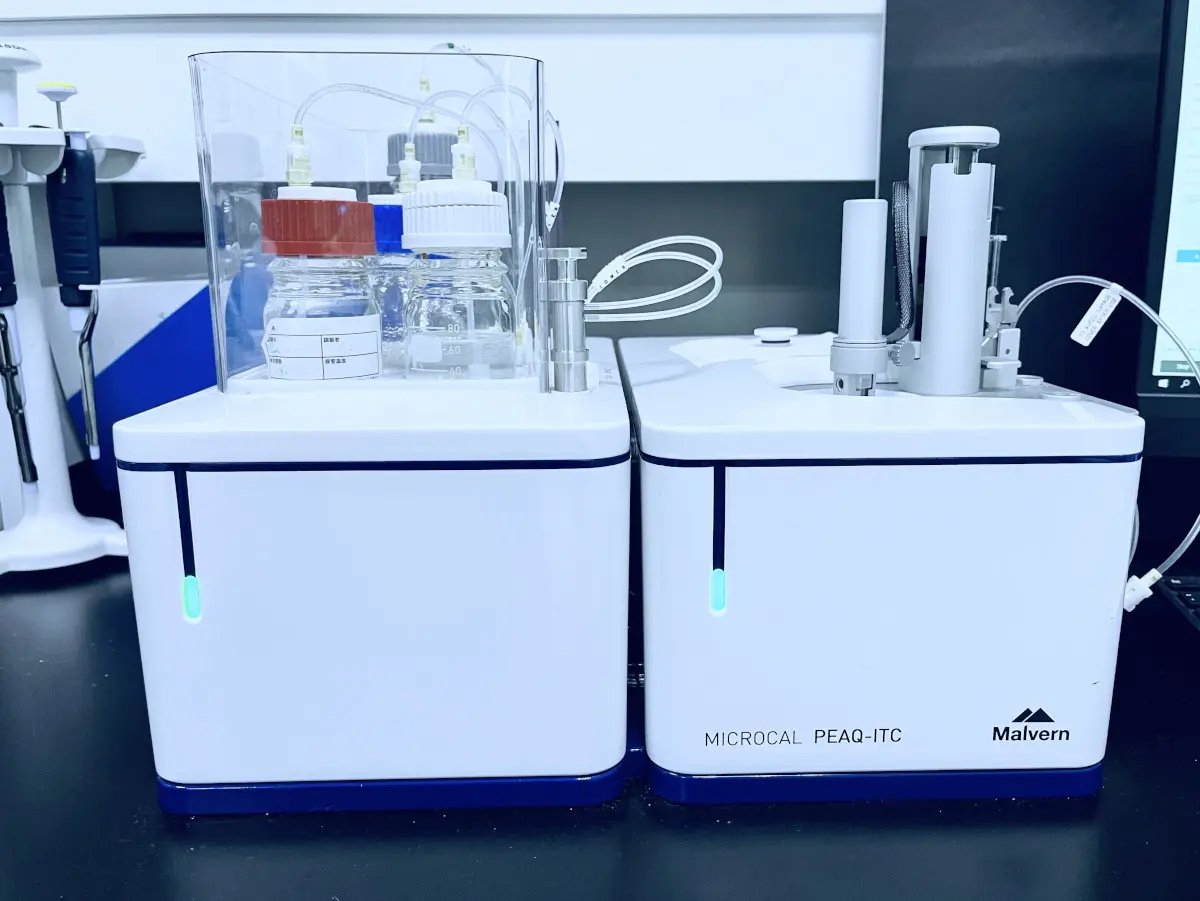
We propose methods for evaluating binding affinity using multiple techniques, including isothermal titration calorimetry (ITC) and surface plasmon resonance (SPR).
Link:Interaction Analysis
Is it possible to analyze aggregates in biopharmaceuticals?
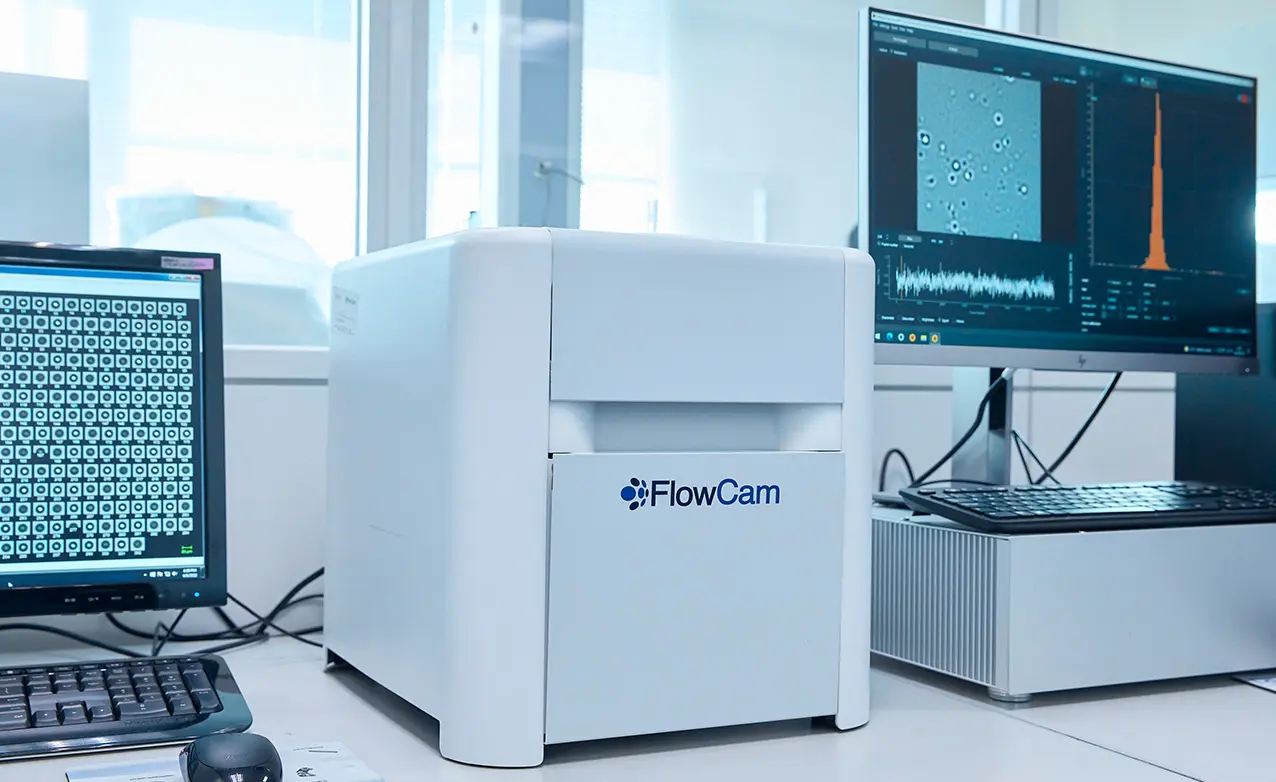
Yes. We can evaluate the number, size, and shape of aggregates. Furthermore, we can also identify and analyze the origin of the aggregates, such as proteins, silicone oil, and surfactant degradation products.
Link:Aggregate & Particle Analysis
During stability testing of biopharmaceuticals and gene therapy products, insoluble particulate matter was detected. Could you propose tests to identify the cause and resolve this issue?
We have extensive experience in identifying the causes of insoluble particulate matter generation and implementing suppression measures, having successfully resolved numerous client requests. We tailor our approach to each client's specific case, proposing analytical methods and recommending stable formulations that minimize the generation of insoluble particulate matter.
Can you also provide support for regulatory consultations and preparation of application documents related to CMC, in addition to contract analysis?
Yes. In addition to contract analysis, we can provide application-related support such as attending PMDA consultations and preparing and advising on CMC-related documents submitted to regulatory authorities.
Is it possible to evaluate whether containers or container materials under development can be used for pharmaceuticals?
The evaluation of pharmaceutical suitability for containers and container materials such as syringes, vials, and IV bags can be comprehensively conducted, from test design to the acquisition of necessary data.
Is it possible to evaluate the adsorption of pharmaceuticals onto containers?
It is possible to quantitatively evaluate the adsorption amount.
I want to analyze modifications such as oxidation, deamidation, and phosphorylation of proteins.
Peptide mapping using mass spectrometry enables the analysis of post-translational modifications and chemical modifications in proteins, such as oxidation, deamidation, and phosphorylation. We will determine the modification sites and report the modification rates at each site.
Analysis of antibodies, viral vectors, and viruses is possible.
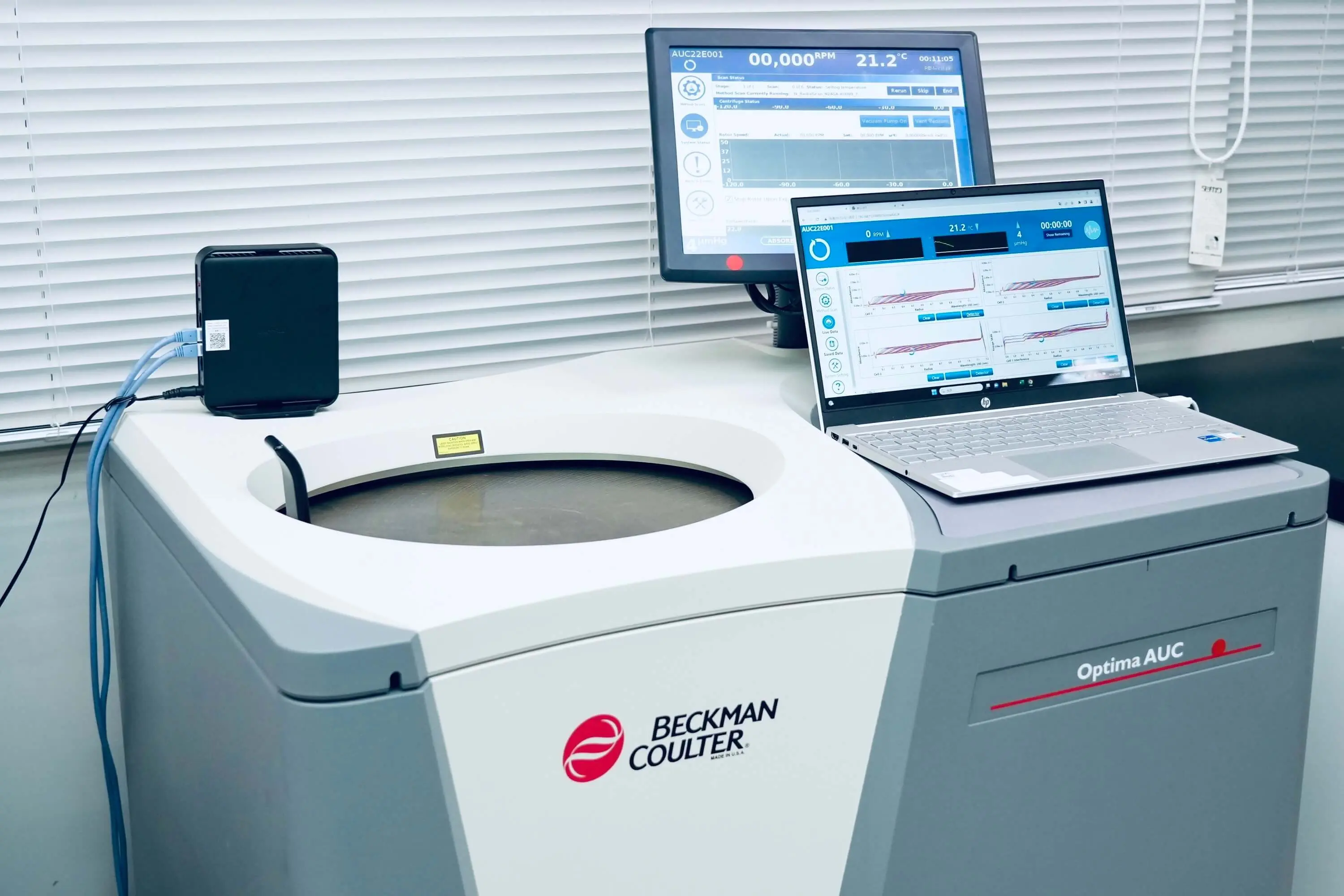
Can AUC be used for QC and shipping tests of clinical samples?
Yes, it is possible. We have developed our own software enabling analysis under GMP standards and have completed various validations. We have established a system capable of performing AUC under GMP standards.