
Mass Spectrometry
The viral proteins (VP) that constitute a virus are known to contribute to the biological activity, immunogenicity, and stability of viral vectors, and are considered Critical Quality Attributes (CQA). For example, adeno-associated virus (AAV) contains three types of VP (VP1, VP2, VP3), and it is necessary to confirm the ratio and primary structure (amino acid sequence) of each. For sequence verification of VPs, intact mass analysis via reverse-phase chromatography mass spectrometry (LC-MS) and peptide mapping using LC tandem mass spectrometry (LC-MS/MS) are effective methods.
Intact mass spectrometry allows sequence confirmation by introducing denatured or reduced proteins into a mass spectrometer without cleaving peptide bonds, using the resulting molecular mass information. Peptide mapping is the only method capable of comprehensively identifying VP modification sites. This technique employs enzymes such as trypsin to cleave peptide bonds in proteins, followed by separation and detection of the resulting peptide fragments. Furthermore, analyzing these fragments using software allows the retrieval of the protein's amino acid sequence, including post-translational modifications. It is also possible to quantify post-translational modifications occurring on the protein side chains at levels of several percent.
At U-Medico, we provide contract analysis services for intact mass spectrometry and peptide mapping of viral vectors, including AAV, and oncolytic viruses. Leveraging our accumulated expertise and the latest scientific insights from our close collaboration with Osaka University, we deliver high-quality services.
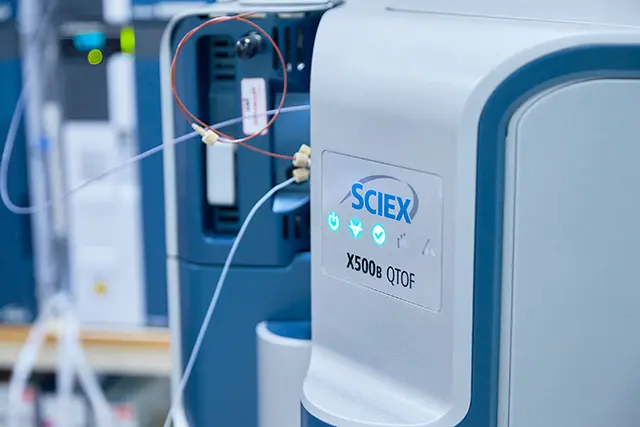
Mass spectrometer(X500B QTOF)
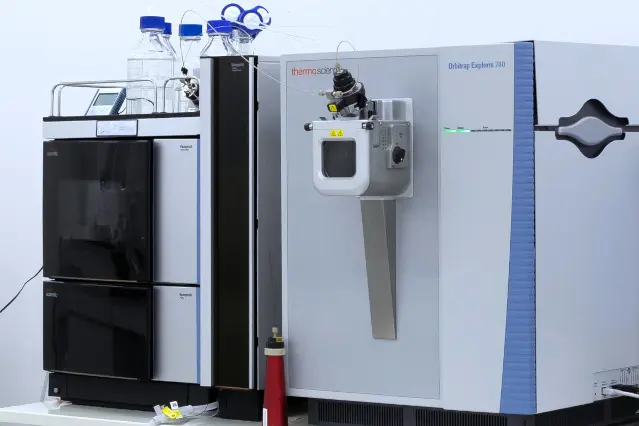
Mass spectrometer(Orbitrap Exploris 240)